Robotic Machine Tending
One operator, several machines, and a spindle that stops waiting on people.
A robot that loads and unloads your CNC mill, lathe, saw, or tube bender, so one operator runs several machines and the spindle keeps cutting.
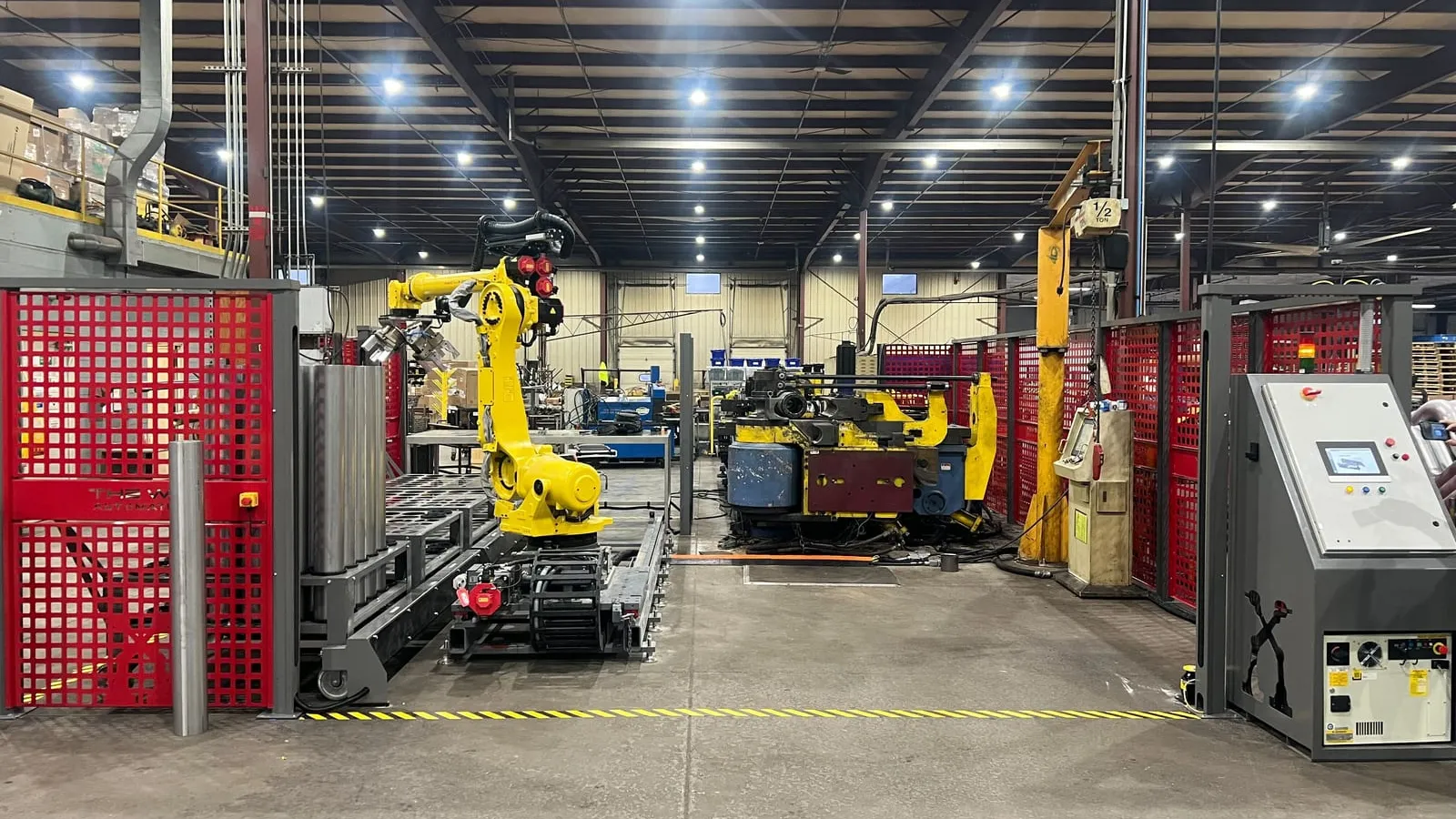
- CNC mills and lathes, saws, tube benders, and press brakes
- Rail-mounted robots that serve more than one machine
- Part presence checks and error recovery the cell handles on its own
- Lights-out runs proven on a real order, not a demo
The problem
A skilled machinist spends the shift standing at a door: the lathe that waits for a hand every four minutes, the saw fed one bar at a time, the tube bender that needs a person for every bend. The machine can cut for longer than anyone can stand there.
What the cell does
A robot sits between the raw stock and the machine. It picks the blank, loads the chuck, vise, or bender, waits for the cycle, unloads the finished part, and racks it for the next process. The operator loads the next cart or runs the machine beside it. Lights-out is the same cell with three more things: part presence checks, recovery the cell performs on its own, and a report of what happened overnight.
- Tube bending, lights-out. A FANUC robot on a rail feeds cut tube into a CNC bender, supports it through every bend, and racks the finished part. One order ran 30 parts unattended, with 17 false safety trips caught and cleared by the cell: the tube bending study.
- Mills, lathes, and saws. A collaborative or industrial arm loads vises and chucks from a staged cart, and feeds bar and tube from a rack.
What it does not do
- It does not set the machine’s pace. The machine still cuts at its own speed; the robot removes the waiting between cycles.
- It does not need a new machine. The cell works with your own mill, lathe, saw, or bender, through the machine’s own I/O or Ethernet.
- It does not suit parts that vary without pattern. If the work repeats and the parts are consistent, the machine can run on its own; if not, we say so at the first visit.
Questions we get on the first call
Does lights-out really work, or does the cell just stop at 2 a.m.?
It works when the cell can recover from what stops it. That means part presence checks, grip checks, a documented fault list, and recovery the cell performs without a person. On the tube bending order, the cell caught 17 false safety trips on its own and finished the run.
Cobot or industrial robot for tending?
The part decides, and so does the machine. Light parts, short reach, and an operator who shares the space favor a collaborative arm. Heavy parts, long reach, or a rail between machines call for an industrial robot with real guarding.
Can one robot serve two machines?
Yes, when the cycle times allow it. A rail-mounted robot between two machines is a common layout; the cell schedules the loads so neither machine waits on the other.
Is this your station? Start with the Fit Check.
About a minute, with no contact information needed to see the answer. If it fits, we offer a first visit. You decide what happens after.