Our process
From the first walk of your floor to a cell that runs.
Eight stations, one owner on our side, and a decision that stays yours at every one of them. Every cell is built and run in our Bixby shop before it ships, so install day is short and the surprises happen here, not on your floor.
The eight stations
Every station ends with something in your hands, and a choice that is yours.
- CrawlFit CheckFive yes or no questions, about a minute. You see the answer before we ask who you are.You are here
- First visitWe walk your line with you and leave a written read of the station we would look at first. No charge.
- WalkThe WalkA paid floor study: a written map of where time and material wait, in your numbers, and a ranked list of what to fix first.
- Scoping EngagementThe cell concept, the layout and the numbers, in writing. Paid, and priced before you say yes.
- RunDesign and simulateRobot, tooling, controls and safety designed around your parts, then run in simulation before any metal is cut.
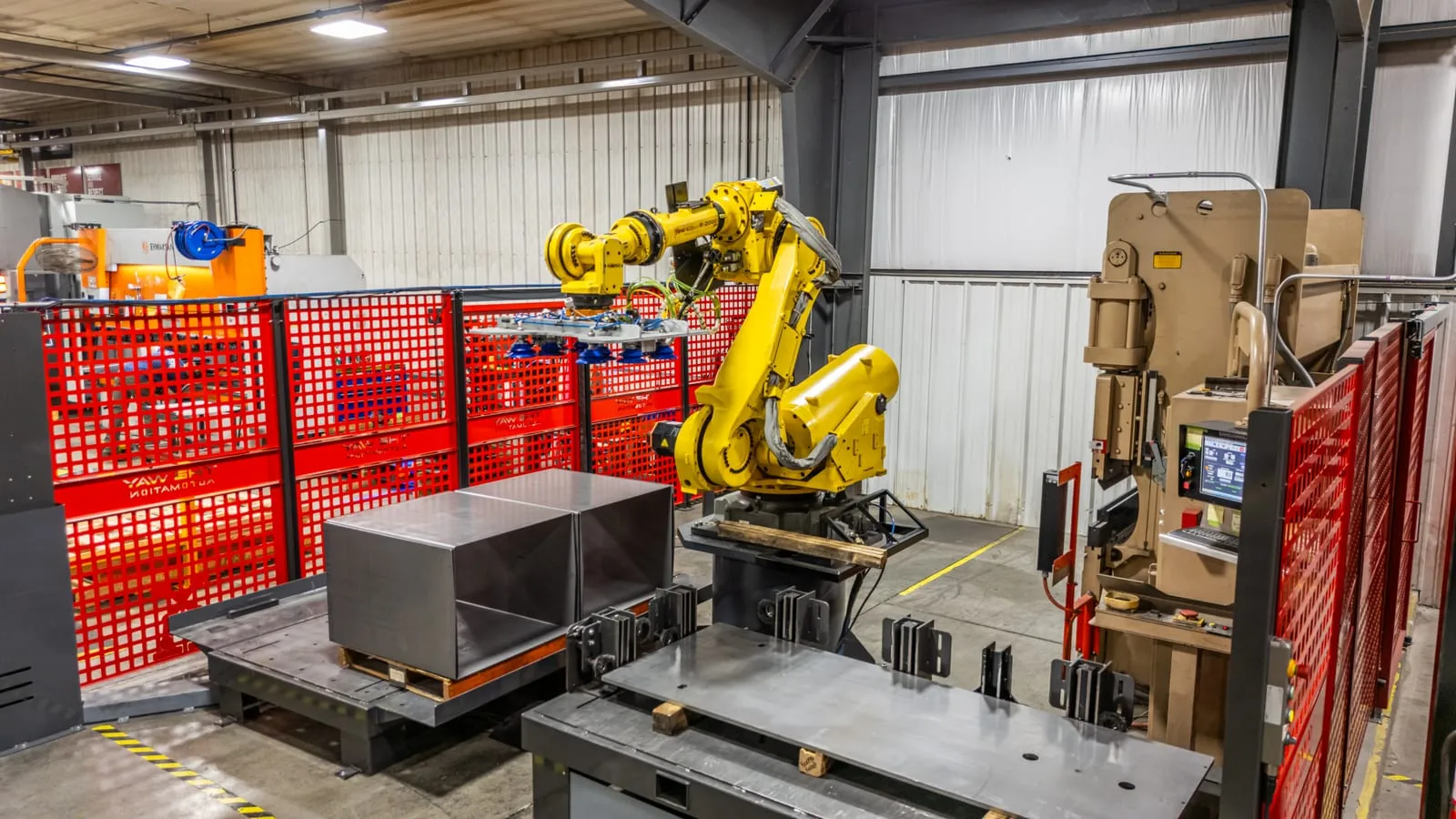
- Build and proveBuilt as a modular skid in Bixby and run with your parts. You accept it with us before it ships.
- Install and trainInstalled and tuned on your floor, accepted again in place. Your operators are trained before we leave.
- BackedOne year warranty from the earlier of substantial completion or first production use.
The first visit is where the free engineering ends. We say so before we arrive.
Scoping Engagement
Clarity first. Metal second.
A cell sized from a brochure fits a brochure. A cell sized from your parts, your line rates, and your floor fits your shop. The Scoping Engagement is where that measuring happens, in writing, before you commit capital.
It is paid work, priced before you decide. The first visit is free and ends with a written read. Scoping is engineering, and engineering is paid. You hear the fee in writing before you say yes, and if you decide not to build, the engagement ends there.
Why we measure first
The number that sizes the cell is not in any catalog. It is your parts, multiplied by the time each one takes.
Show the math, with example numbers
What goes in
- Parts a week
- 2,000
- Seconds a part, today
- 90
The formula
cell hours needed a week = parts x seconds / 3600
Example numbers. Scoping replaces them with the ones measured on your floor. That number decides how many stations and how many shifts.
What you walk away with, in writing
- Your numbers, measuredYour parts, rates and shifts, measured on your floor, not assumed.
- The cell and the layoutA cell concept and a layout drawn on your floor plan, with what is included and what is not.
- The risks, in writingA risk register: what could go wrong, and what we would do about it.
Between the order and the first part
A written progress report every Friday during your build.
The hard part of buying capital equipment is the silence after the order. We remove it in writing. From the first design day to acceptance, you get a report every Friday, and a stage tracker in your portal shows where the cell is.
- Design
- Procurement
- Build
- FAT
- Ship
- Install
- SAT
- Accepted
What stays yours
The decision, your data, and your prints.
- The decisionAt every station. No step commits you to the next one.
- Your dataIt stays in your building.
- Your printsWe work on what you make, never on what your customers trusted you with.
- Your scope, in writingWhat is included, and what is not.
Start where it starts: the Fit Check.
About a minute. If it fits, we offer a first visit. If you already know the station, book the call.