Case study · Robotic Material Handling · 2026
Two Matched Cells on One Bending Line: The Twin Palletizer
Every panel off a bending line was read, sorted and stacked by hand. Two identical FANUC cells now pick each part and stage it by destination.
- 2Identical cells, built and tested as a pair
- 125 kgRobot payload, each cell
- 8 mTransport track, each cell
- 3Systems that had to agree before a part moved
What you told us
The plant forms sheet-metal panels on a bending line, and every panel that came off the outfeed conveyor had to be read, sorted and stacked by hand before it could move on. Someone stood at a moving line, shift after shift, identifying parts and building pallets. It tied skilled people to repetitive handling and it capped how fast the line could run.
The plant had looked at automating this floor before and walked away when the numbers did not work, so the bar was higher than usual: the cell had to earn its floor space, not just run. And it could not be one machine bolted onto the line. The bending line’s control system, the plant’s production system and the robot cell all had to agree on what part was coming before the robot touched it.
What we built
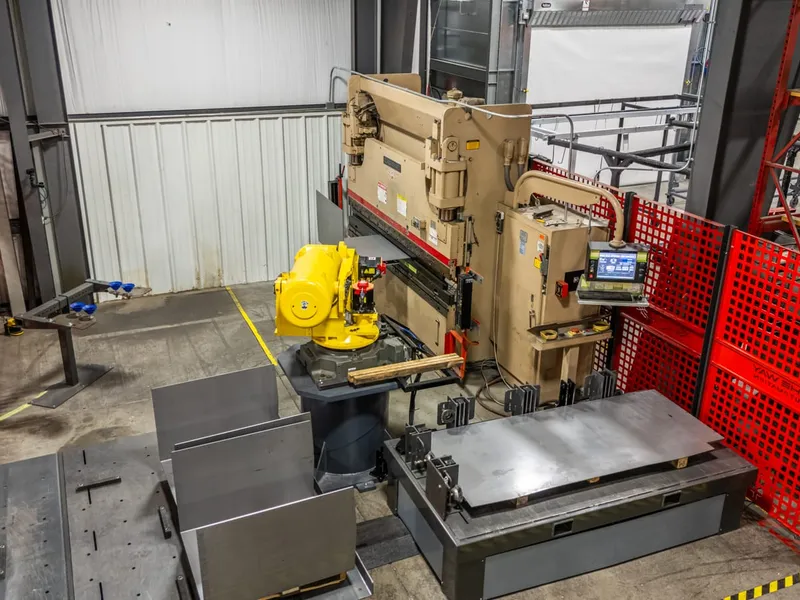
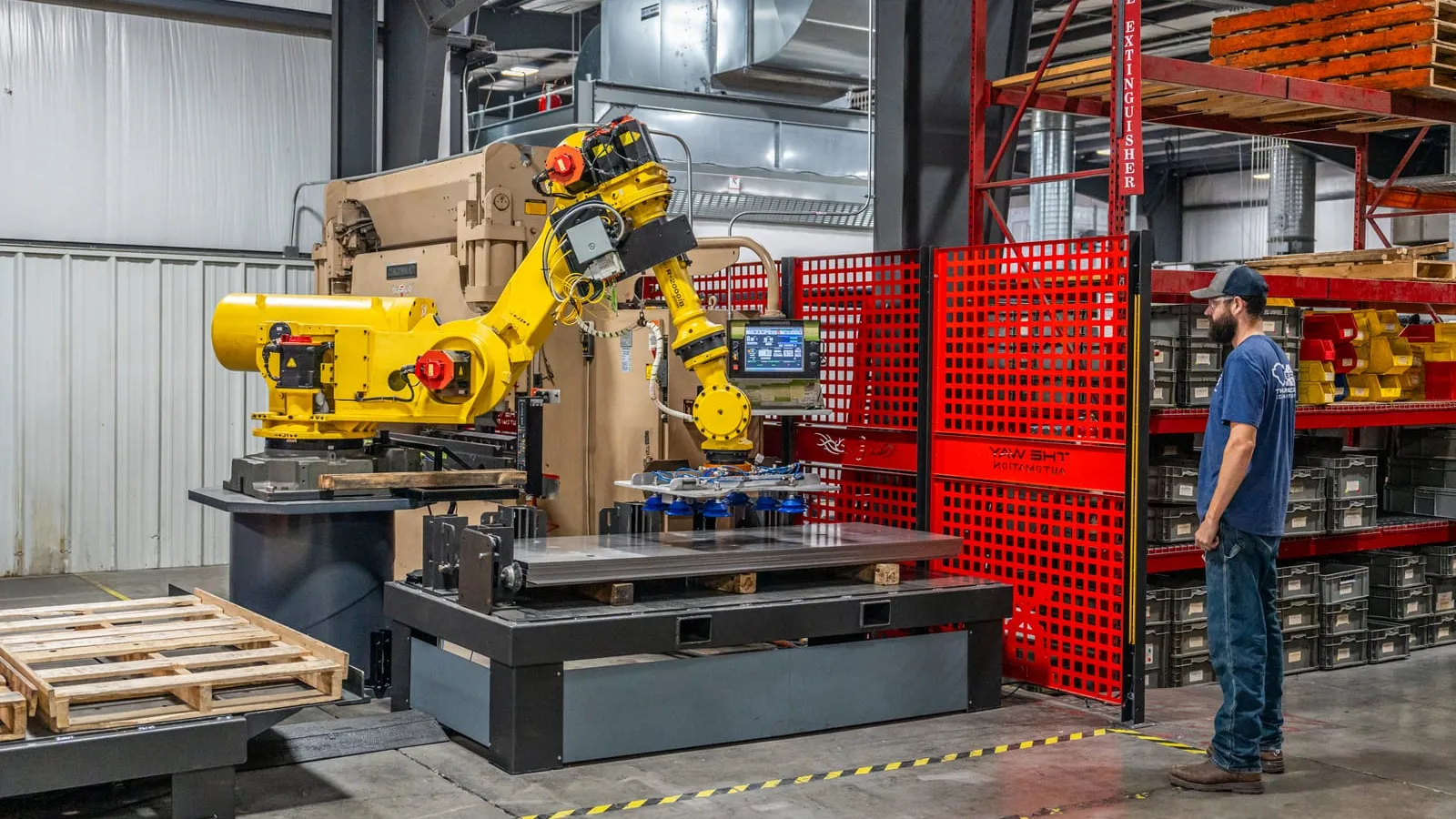
Two identical robotic cells, a matched pair, each around a FANUC R-2000iC/125L on an eight-meter transport track. They were built as twins on purpose: every change proven on the first cell during factory testing was carried to the second exactly, so the plant received two proven systems instead of one prototype and one guess.
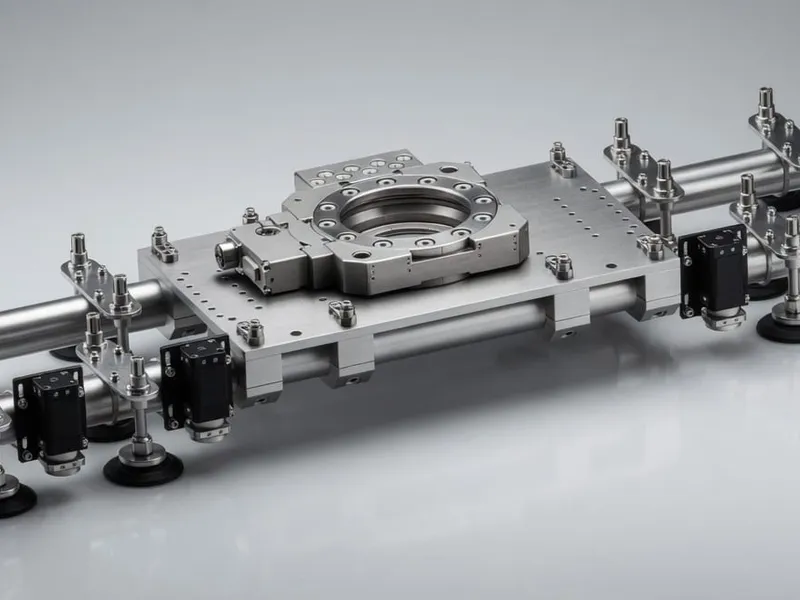
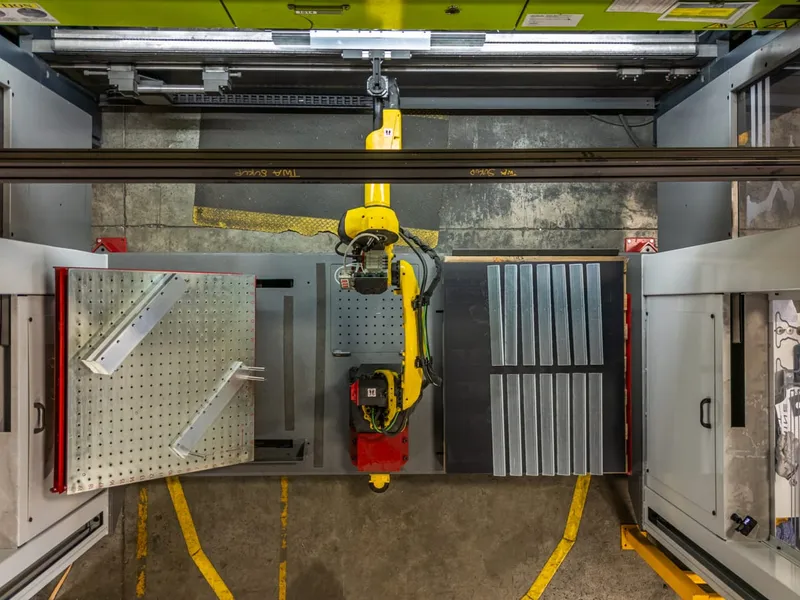
Each cell reads the part coming off the bending line, picks it, squares it on an active cart-positioning system for a precise regrip, and stages it into the right kitting cart by destination. One custom gripper does the work, a machined-aluminum plate with vacuum cups, its own sensing and air regulation, and several tool modes in a single tool rather than a rack of grippers. The data handshake runs from the plant’s system through the bending line to the cell, so the robot knows the part before it arrives.
When a roll table supplied with the bending line arrived as rollers and motors with no drives or control logic, our engineers built the control cabinet to run it from the maker’s documentation. Both cells were factory tested in our shop, then set on site inside steel perimeter fencing finished in the customer’s own colors.
Who we worked with
The bending line is a major European maker’s system, and their engineers worked the conveyor and data integration with us directly. A machinery dealer anchors the relationship with the plant and has stayed in the project. FANUC built the robots; we are a FANUC Authorized System Integrator. Cell design, the gripper, the cart system, the extra control cabinet, the fencing and the on-site install were ours.
What came next
In early September 2026 the first cell ran a full cycle, from the infeed conveyor to the kitting carts, for the plant’s manufacturing leadership and the bending line maker’s own leadership. The second cell follows it onto the floor, and acceptance for both is being set together with the customer. Nothing here states a throughput, labor or quality figure: the cells have not run in production yet, and any figure that comes later will be measured on this line.
Where the relationship goes from two cells is the customer’s decision.
Your station next
Start with your own station
The Fit Check takes about a minute on your phone. You see the answer first, and you decide what happens next.