Case study · Robotic Press Brake Tending · 2026
Sixteen Foot Panels Over 500 Pounds: Bringing Trailer Forming In House
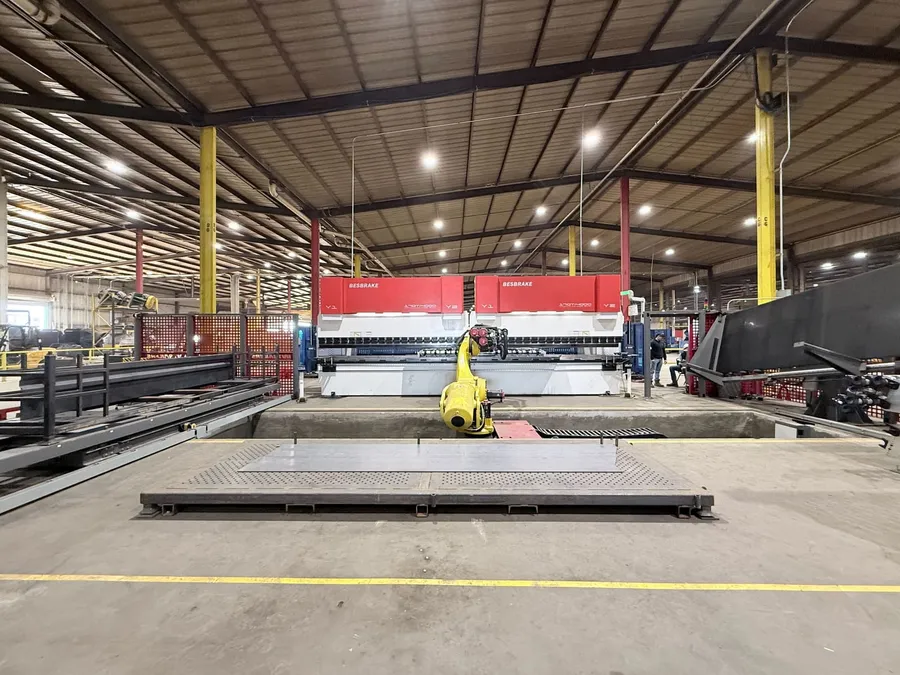
Trailer panels up to 16 feet and 548 pounds, formed by an outside supplier. A 500-kilogram-class robot on a recessed rail now forms them inline.
- 548 lbHeaviest panel in the family
- 16 ftLongest panel in production today
- 10 mRail, recessed into the floor
- 3 to 5Bends per panel across the family
What you told us
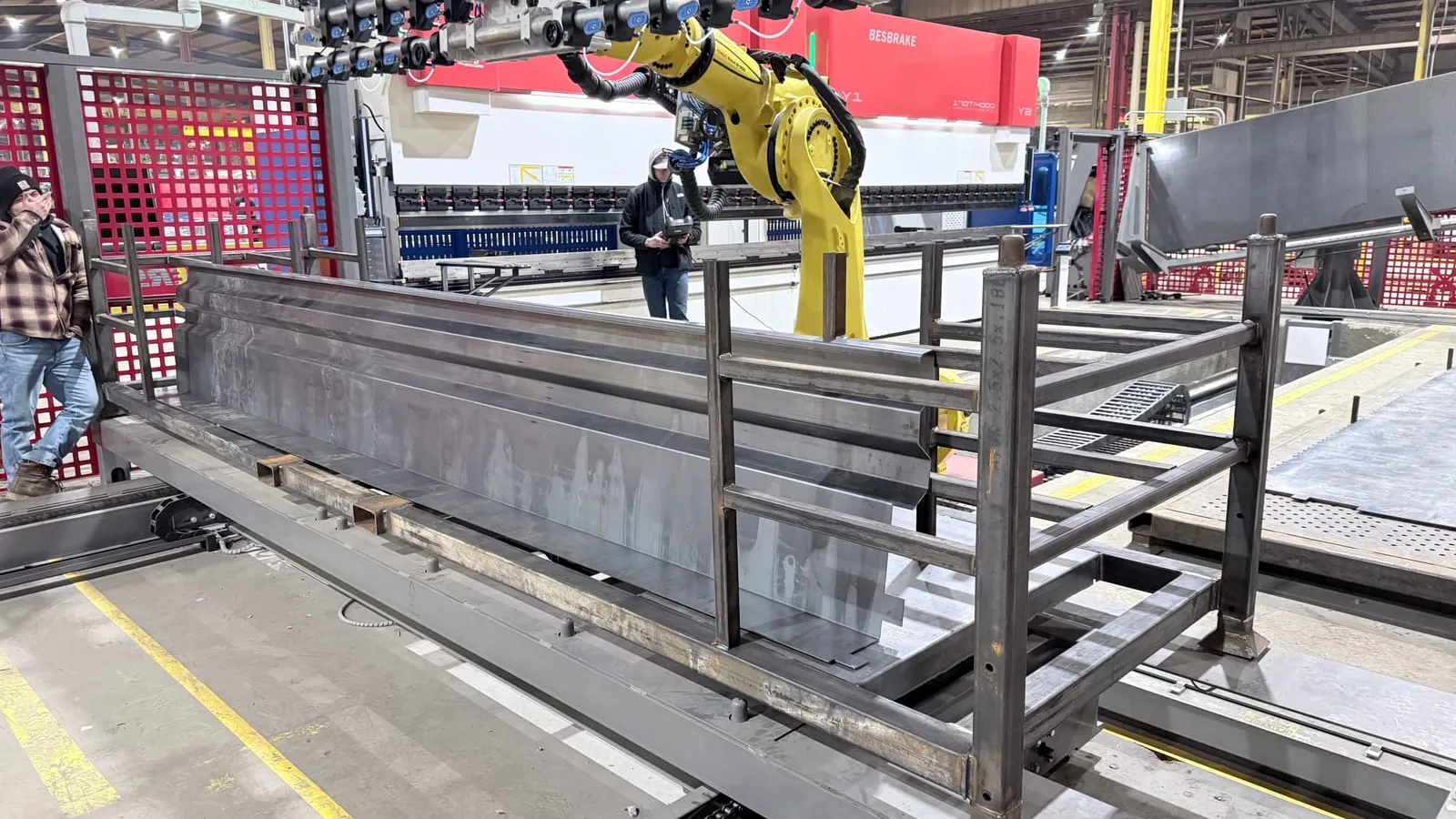
The company is one of the biggest names in dump and gooseneck trailers, building toward tens of thousands of units a year. Every trailer needs formed sidewall and front-wall panels: sheet metal twelve to sixteen feet long, up to 548 pounds a piece, three to five bends each, in a mix of profiles.
All of that forming was outsourced. Scheduling waited on a supplier, quality varied load to load, and a cost premium rode along on every trailer. Wherever the panels were formed, parts this heavy meant people lifting, steadying and flipping steel at the edge of what is safe by hand. The ask was to bring the forming in house, inline with production, with nobody’s hands on the steel between the forklift and the finished stack.
What we built
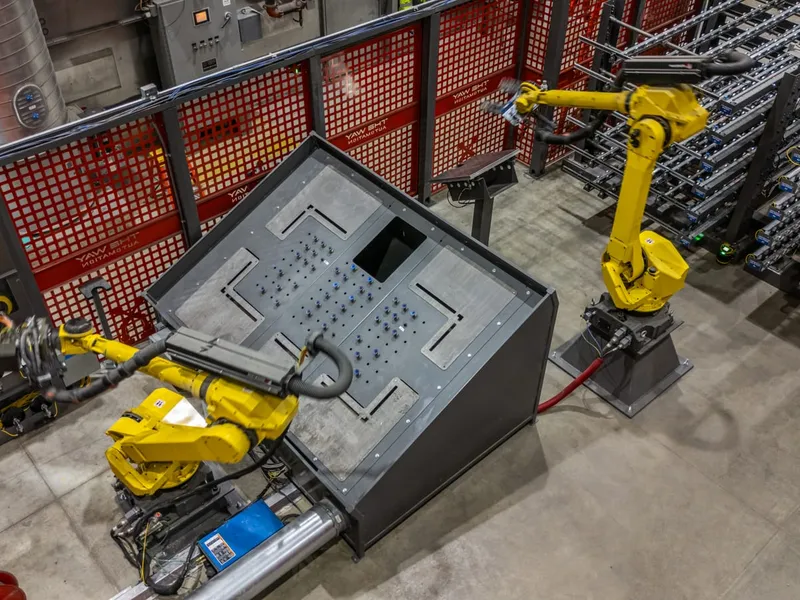
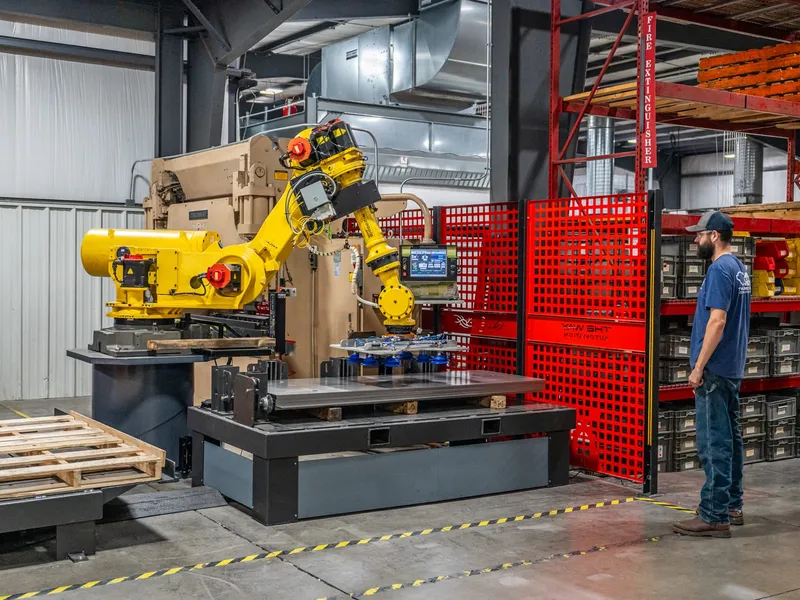
A heavy-payload press tending cell around a FANUC M-950iA/500, a 500-kilogram-class robot, on a ten-meter seventh-axis rail recessed into a floor pit so it works at floor level in front of a tandem press brake system. Two tools share the work through an automatic tool changer: a multi-zone vacuum gripper for thin-gauge sheet, and a permanent-electromagnet gripper, which holds under power loss, for the multi-bend parts.
The pit was engineered, not just dug: our controls lead wrote the concrete specification so a 500-kilogram robot and its rail sit on a floor that will not move. The flow is forklift in, robot pick, a regrip stand to square the part, the bends, then formed panels stacked on the outfeed pallet in sets of six or twelve. The panel programs were written offline against a digital model before on-site tuning, and the cell sits inside a full safety package of laser scanners, light curtains, interlocked gates and about eighty feet of fencing built to ANSI/RIA R15.06-2012.
Who we worked with
An equipment representative who also represents the press brake maker brought us the project and stayed close through commissioning. FANUC built the robot; we are a FANUC Authorized System Integrator. The tandem press brake came from its maker, and the cell was engineered around it. Design, both grippers, the pit specification, controls, programming and commissioning were ours.
What came next
The design, development and programming scope was completed in July 2026, and the forming that used to leave the building now happens inline. A sister plant under the same ownership runs its own wall parts through the cell too. The system was engineered with headroom to twenty-foot lengths, so the part family can grow without a second machine.
One lesson from this floor we now carry to every cell: the biggest lever on how fast a cell ramps is a dedicated operator who owns it. We say so at kickoff now, on every project.
Your station next
Start with your own station
The Fit Check takes about a minute on your phone. You see the answer first, and you decide what happens next.