Case study · Robotic Press Brake Tending · Pella, IA
150 lb Plate Unattended: Thunder Creek, Featured by FANUC America
Thunder Creek kept its 135-ton press brake. TWA put a robot on it. Six-foot, 150-pound plate runs unattended, and FANUC America published the story.
- 150 lbSteel plate per part, unattended
- 6 ftPlate length the gripper carries
- 135 tonPress brake kept, not replaced
- FeaturedPublished by FANUC America
What you told us
Thunder Creek builds fuel and service trailers in Pella, Iowa. Every one starts as steel plate, over six feet long and more than 150 pounds a piece. Two operators tended the press brake, lifting, steadying and flipping that steel one part at a time. The work was hard to staff and hard on the people doing it.
The cost did not stop at the brake. When one bend came out different from the last, the part did not sit right in the robotic welding cell downstream, and the shop paid for it twice.
What Thunder Creek did not want was a new press brake, a machine shipped out for weeks, or a halt in production.
What we built
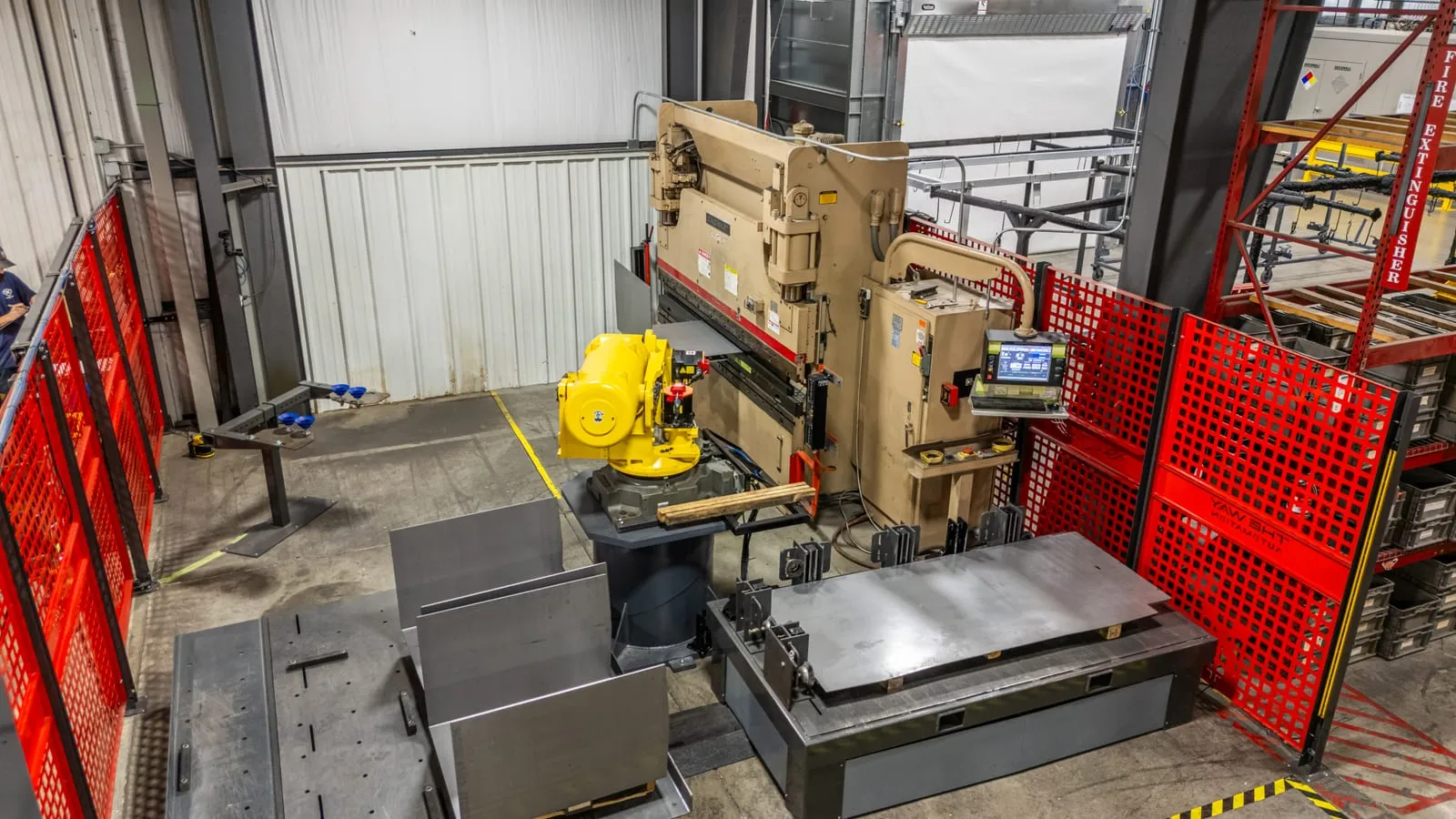
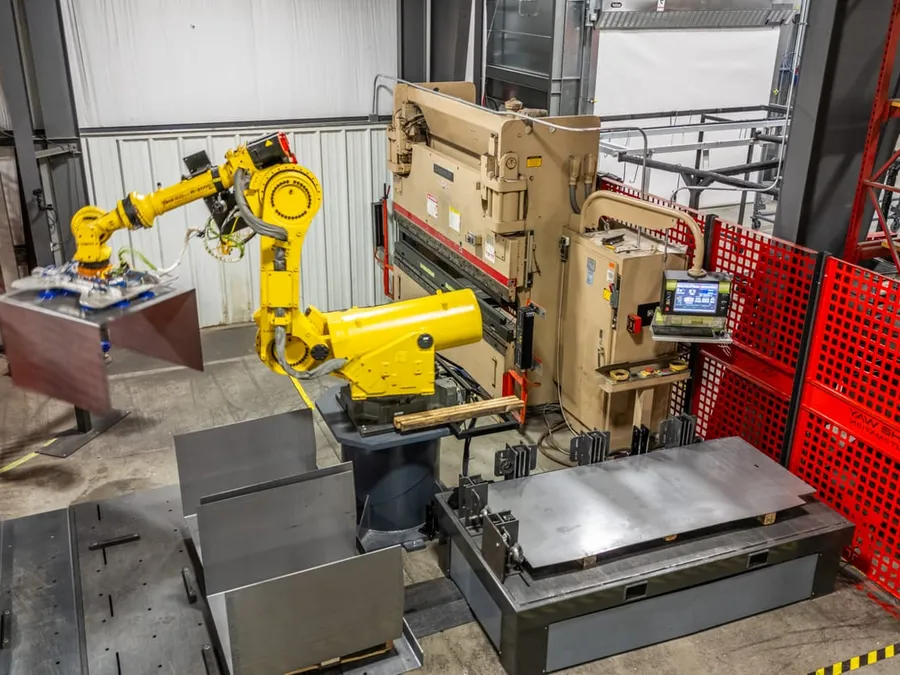
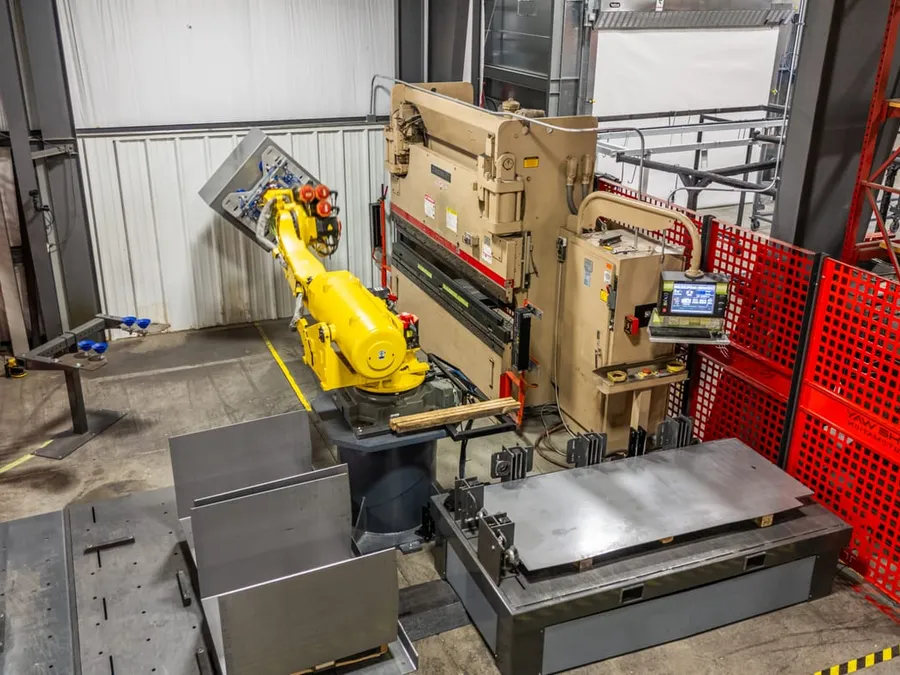
We put the robot on the 135-ton Cincinnati press brake Thunder Creek already owned, on their floor, around live production. Nothing shipped out. Nothing was replaced.
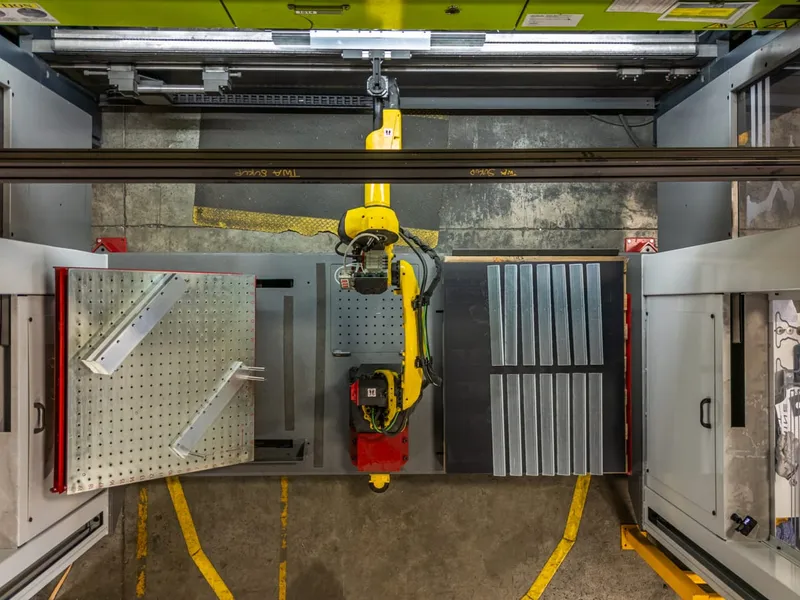
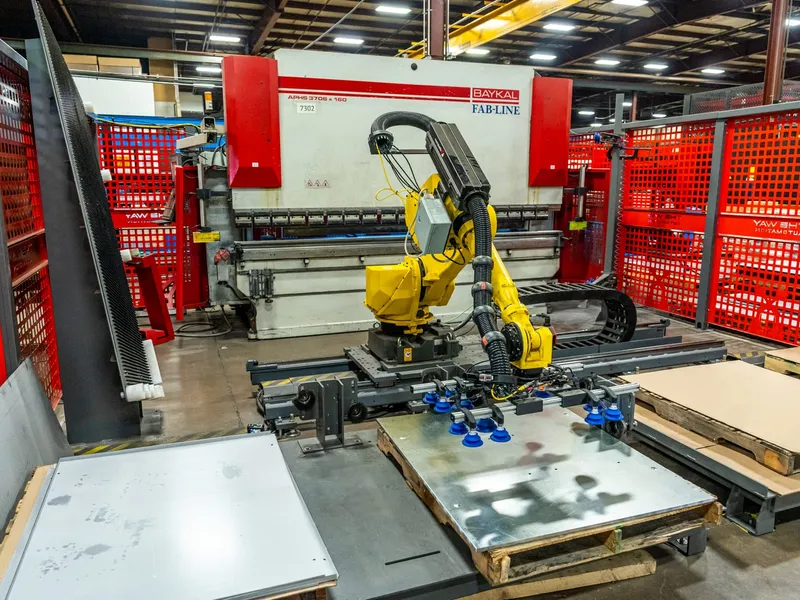
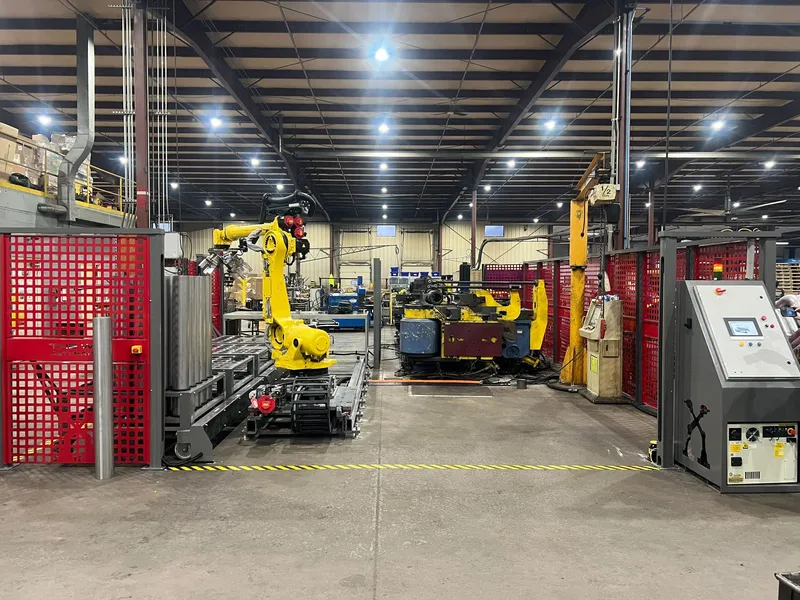
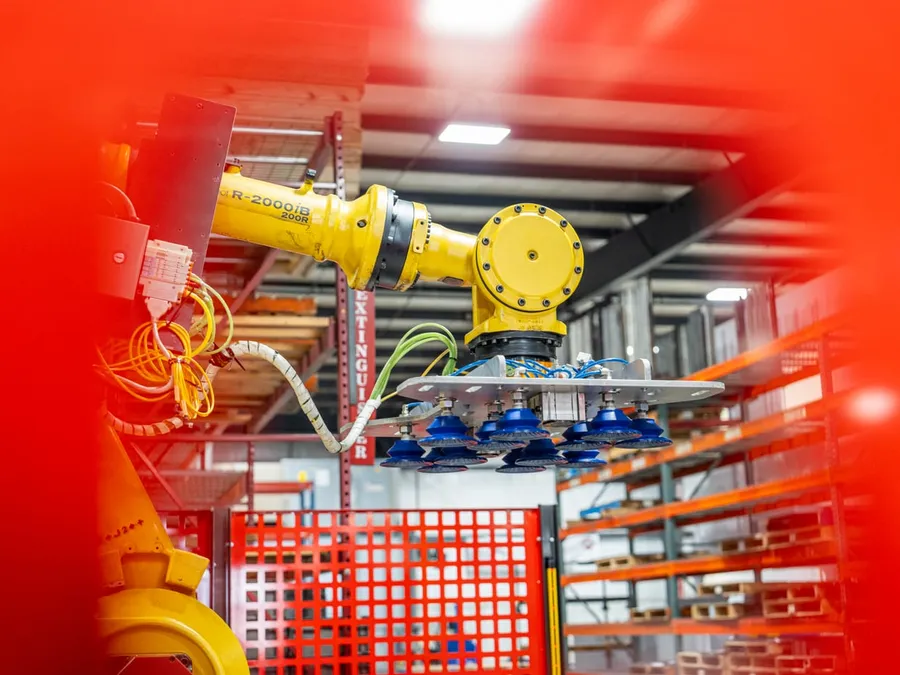
The robot is a FANUC R-2000iB/200R, a 200-kilogram-class arm set on a riser so it reaches the brake’s full working envelope with a six-foot plate on the wrist. Off-the-shelf grippers do not hold a part like that, so we designed and built a multi-cup vacuum gripper in our own shop, paired with a sensor-equipped regrip station that reorients the plate between bends. The cell is our standard press brake tending line, fitted to Thunder Creek’s parts and floor.
The result is a station that forms the same plate the same way every time, which is what the welding robots downstream care about most.
Who we worked with
FANUC America built the robot and published the case study that names Thunder Creek as the customer and The Way Automation as the integrator. We are a FANUC Authorized System Integrator. The engineering, the tooling, the controls and the on-site install were ours, one team from first visit to running cell.
What came next
Thunder Creek reported less scrap and higher output to FANUC America. FANUC’s published results are qualitative, and so are ours: we do not print a percentage nobody measured. Thunder Creek then ordered a second press brake tending cell from us, on a second brake of a different make, commissioned in 2026.
Read FANUC America’s own account: Automated brake press tending helps Thunder Creek increase output and reduce labor strain.
If your brake is the one with two people in front of it, the conversation starts with a walk past that station, not with a new machine.
Your station next
Start with your own station
The Fit Check takes about a minute on your phone. You see the answer first, and you decide what happens next.