Case study · Robotic Material Finishing · 2024
19,700 Doors at 100 a Day: A Robotic Sanding Cell
Aluminum service-body doors were sanded by hand, and aluminum dust burns. A two-robot cell with wet dust collection finishes 130-plus sizes.
- 19,700Doors through the cell by spring 2025
- 100Doors a day at full pace
- 5.5 minMinutes a door, down from about 8 by hand
- 130+Door sizes identified on its own
What you told us
The shop builds work-truck bodies, and every one carries aluminum compartment doors, more than 130 sizes from a small 10 by 16 inch panel up to 36 by 72. Every door was sanded by hand, both sides, to a finish that had to match door after door while production climbed toward a record year. Hand sanding could not hold the pace, and nobody wanted the job.
The harder problem was the dust. Aluminum sanding dust is combustible, the plant had already had a smoldering fire in a sanding booth, and its safety team would not accept a dry dust collector. The same plant also makes steel parts that look just like the aluminum ones, and mixed dry dust is an ignition source. The plant’s position was plain: no dry collection, full stop.
What we built
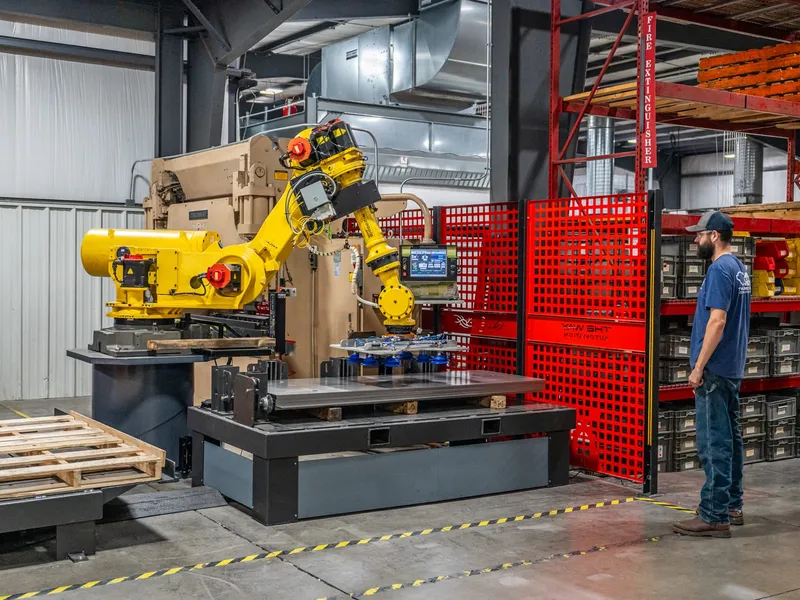
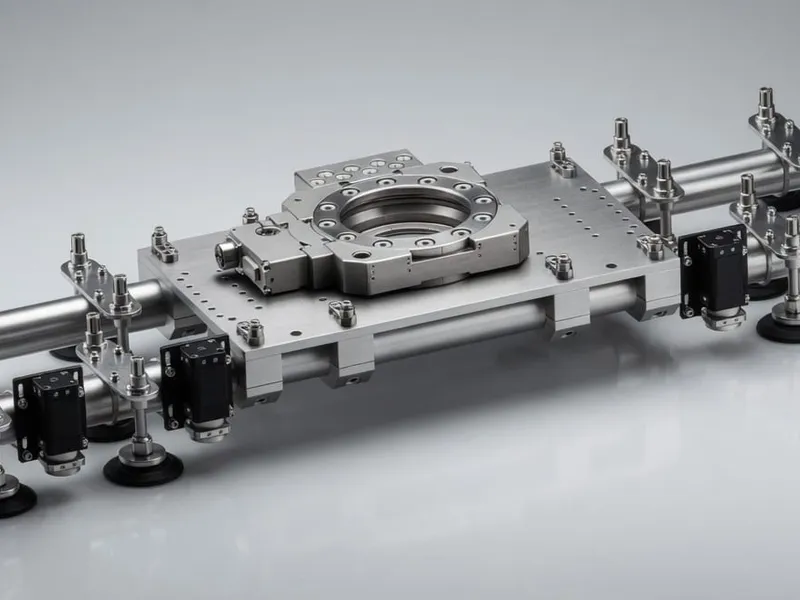
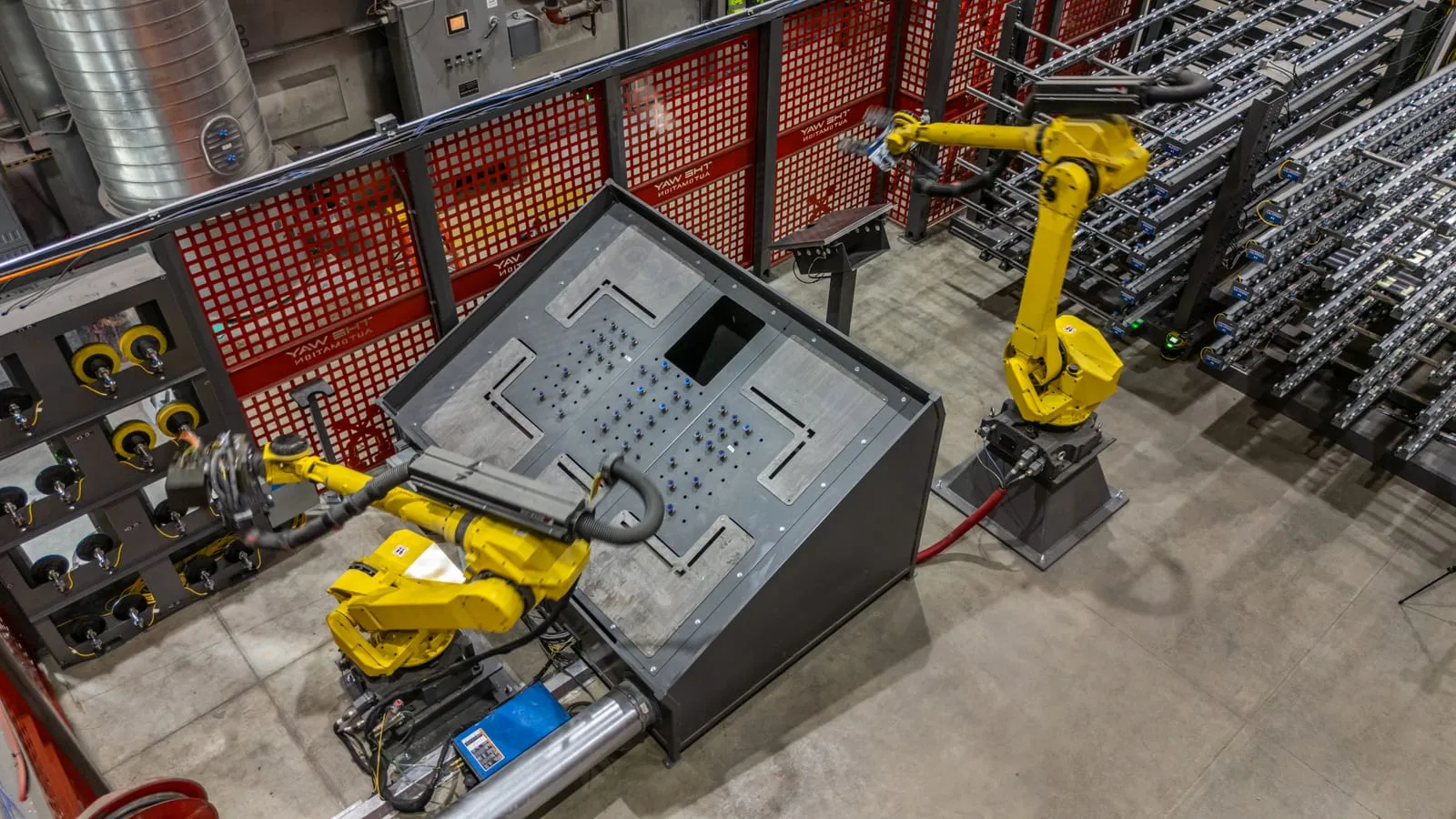
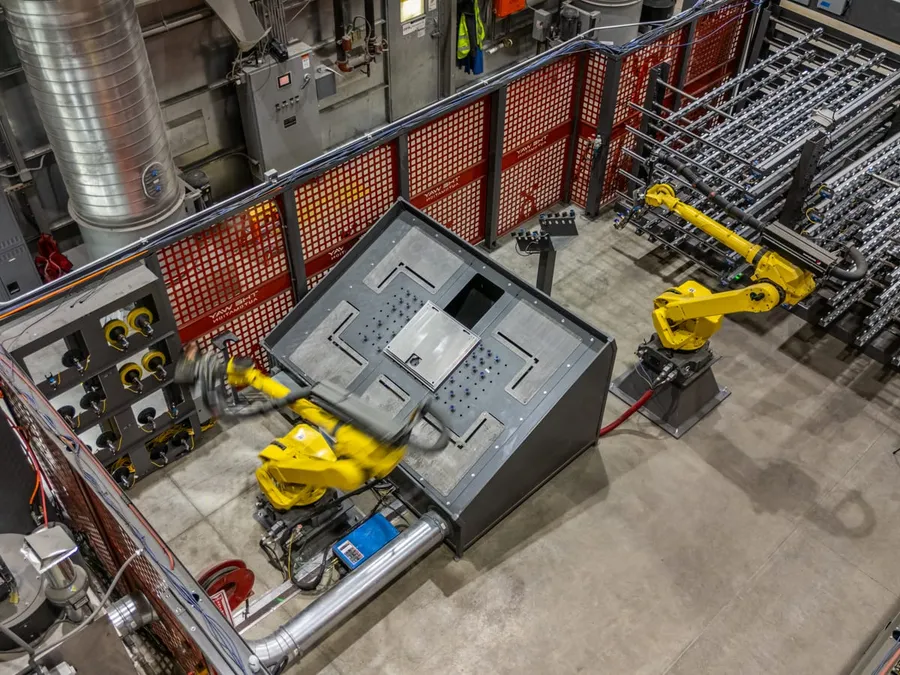
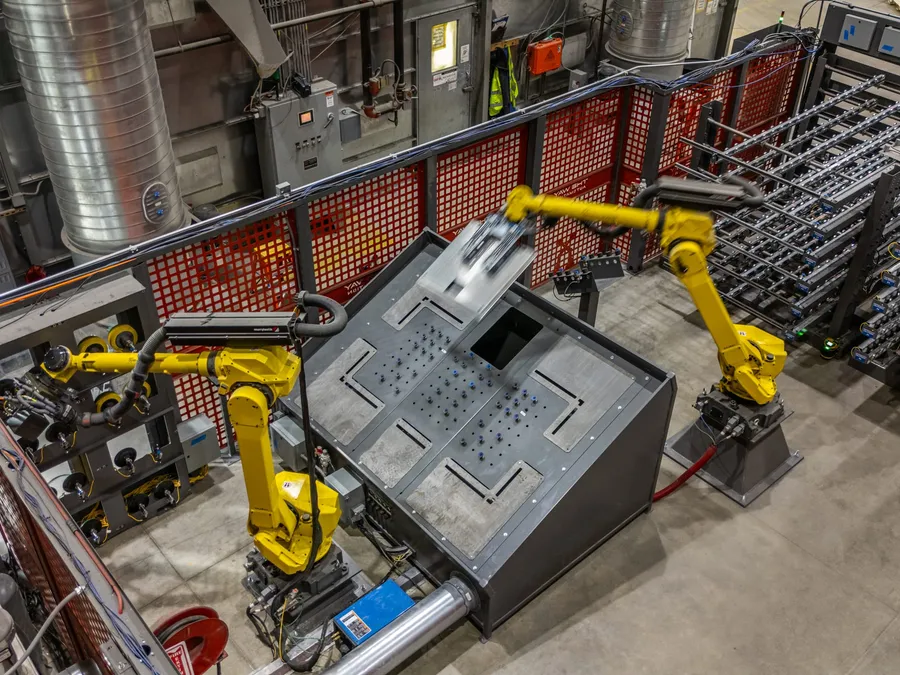
Two FANUC robots share the cell. An M-710iC/50 carries a compliant orbital sanding head that changes its own abrasive. An M-710iC/45m long-reach arm loads, flips and unloads the doors, so both sides get finished without a person touching them. A laser sensor array measures each door as it arrives and picks the routine, so any of the 130-plus sizes can arrive in any order with no per-size setup.
The dust is handled at the source: a zone-controlled vacuum downdraft table feeding a wet dust collector, so combustible dust never accumulates. Ferrous sensing at the gripper hard-stops the cell if a steel part is loaded where aluminum belongs. The cell runs on a safety-rated PLC with light barriers, locked access points and laser scanners, in roughly 20 by 20 feet around an existing monorail, a touch-up booth and a maintenance aisle. It released to production in July 2024.
Who we worked with
A regional machinery dealer introduced us to the shop. FANUC built the robots; we are a FANUC Authorized System Integrator. The wet dust approach was worked out in the design review with the customer’s own process and safety engineers, who knew their dust better than any catalog did. Cell design, tooling, controls, safety and the on-site release were ours.
What came next
The cell was one contributor to the shop’s record production year in 2024. Their own engineer has since kept building on it, reworking the suction-zone logic to use real-time door dimensions, which is exactly what we hope a customer does with a cell once it is theirs.
The sanding and handling half runs at a reliability the customer puts near 99 percent. The infeed and outfeed side still jams more than either of us would like, and that is the open item we are working on with them. A second sanding arm is on the table once it is fixed. Whether and when is the customer’s decision; the cell was built with the room for it.
Your station next
Start with your own station
The Fit Check takes about a minute on your phone. You see the answer first, and you decide what happens next.