Case study · Robotic Press Brake Tending · 2024
Two Years Running: A Press Tending Cell for Grain Bin Hardware
One robot, one part family spanning two orders of magnitude in weight, on the press brake the shop already owned. Running since April 2024.
- April 2024In continuous production since
- 4.5 monthsFrom PO to running production
- 0.05 to 4.6 lbOne part family, lightest to heaviest
- M-10iD/10LFANUC robot running the cell
What you told us
The shop is behind a large share of the grain storage in this country: bins, handling systems, and the galvanized steel hardware that goes into every one. The parts in this story are the kind that ship by the thousand, anchor brackets and chain-assembly supports, laser-cut and press-brake formed, season after season.
All of it was bent by hand. The family runs from a bracket you can palm at a twentieth of a pound to a twenty-one inch anchor bar at nearly five, with the same operator at the same pinch-point machine, cycle after cycle. That caps what the brake can produce at what a person can sustain for a shift. The shop wanted the brake it owned to run more, across the whole family, without a setup every time the order changed.
What we built
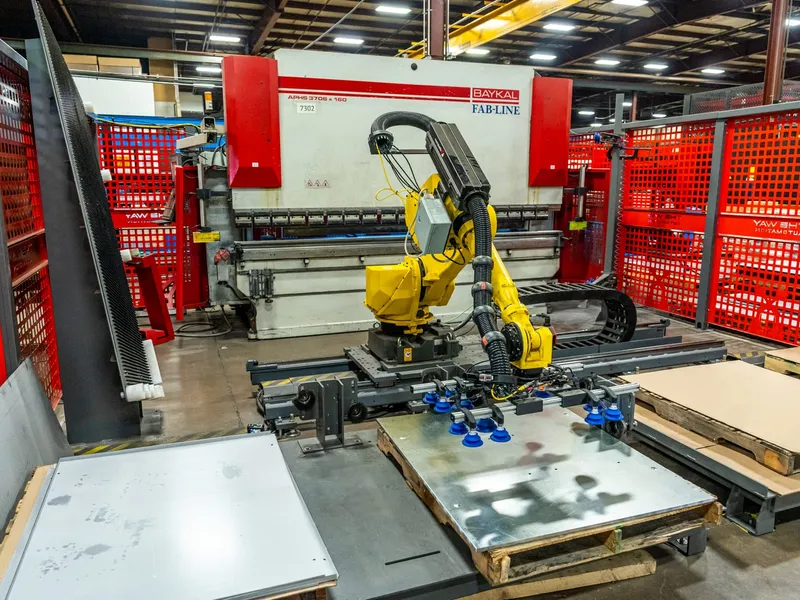
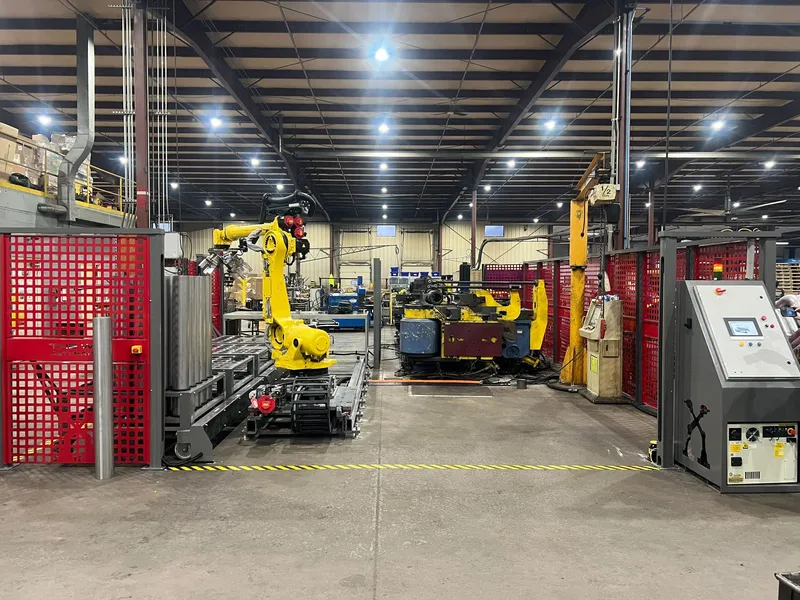
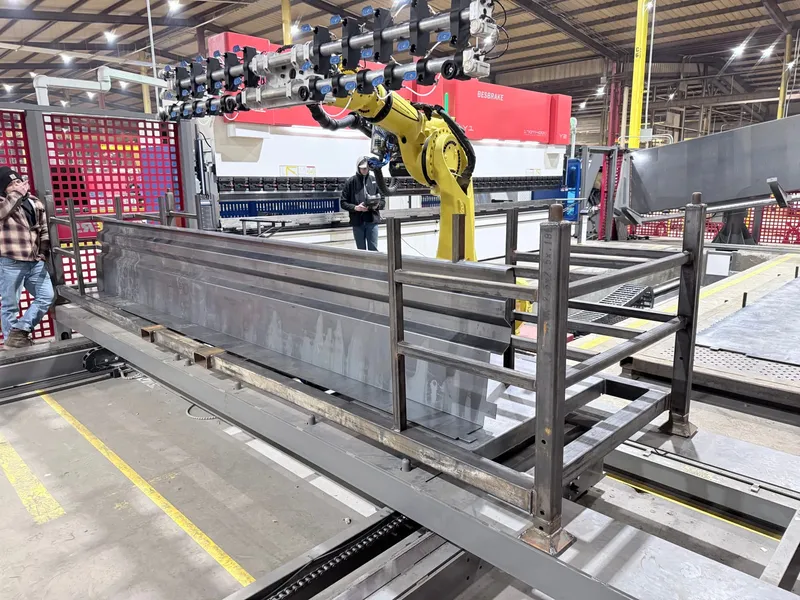
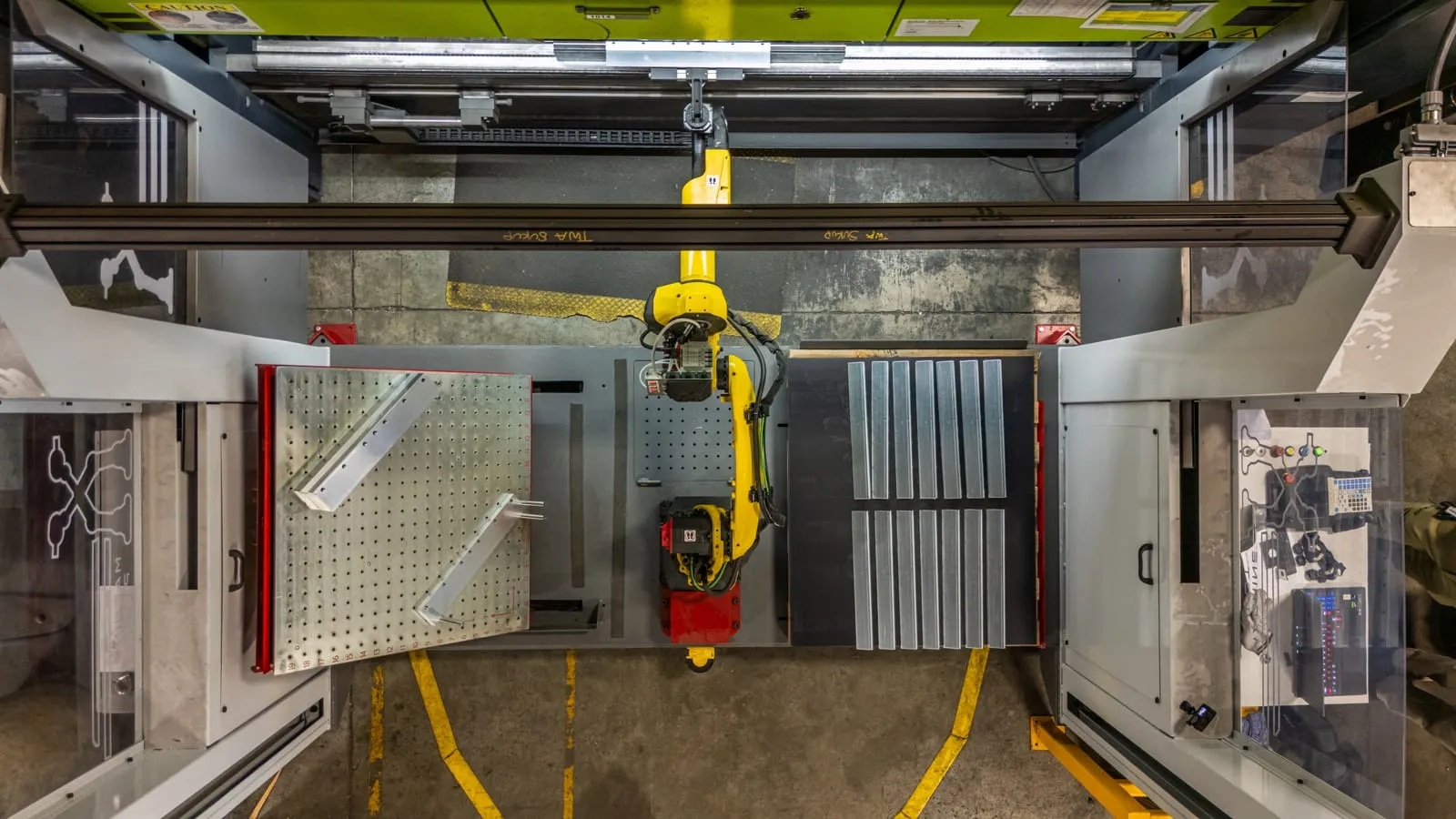
A flexible press tending cell around a FANUC M-10iD/10L, a compact long-reach arm, working with the press brake the shop already owned. The robot picks laser-cut galvanized blanks, finds the back gauge, presents the part through the bend and unloads it, from the smallest bracket to the heaviest bar, with no tooling change between part numbers.
The cell was designed first as a digital twin in FANUC RoboGuide, so the reach, the gauge seeking and the cycle were proven before steel was cut. The gripper was designed and built in our shop. The press reports bottom dead center and end of program, so the robot never moves against a closing die.
The operator’s day is simple: stage the blanks, pick the program, and the cell runs the family. The PO was signed in early December 2023. The cell was running production by the third week of April 2024.
Who we worked with
A regional machinery dealer introduced us. FANUC built the robot and the simulation environment; we are a FANUC Authorized System Integrator. The press brake is the customer’s own machine, kept in place, and its controls stay in charge of the press. Design, gripper, controls, programming and commissioning were ours.
What came next
Two things, both of which are what Backed Here means in practice. When the gripper on the tightest-tolerance part began to flex enough to disturb part detection, we engineered a carbon-fiber replacement, installed it on site, and verified the cell running before our crew left the building. When a robot encoder battery aged out after two years, our engineers walked the customer’s team through it remotely until the cell was back at work.
A regrip station that would extend the cell to multi-bend parts has been scoped. Whether and when to add it is the customer’s call; the cell runs as built either way.
Your station next
Start with your own station
The Fit Check takes about a minute on your phone. You see the answer first, and you decide what happens next.