Case study · Robotic Press Brake Tending
A Brake They Already Owned: The Retrofit
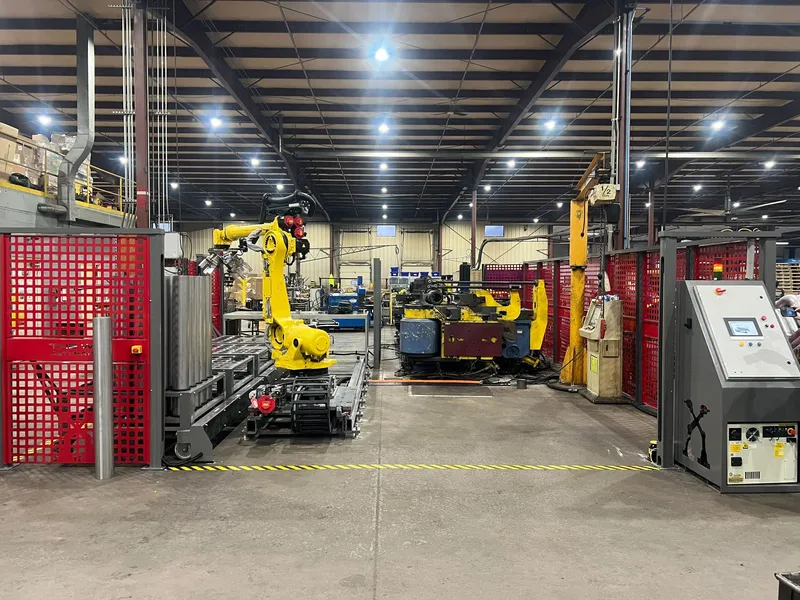
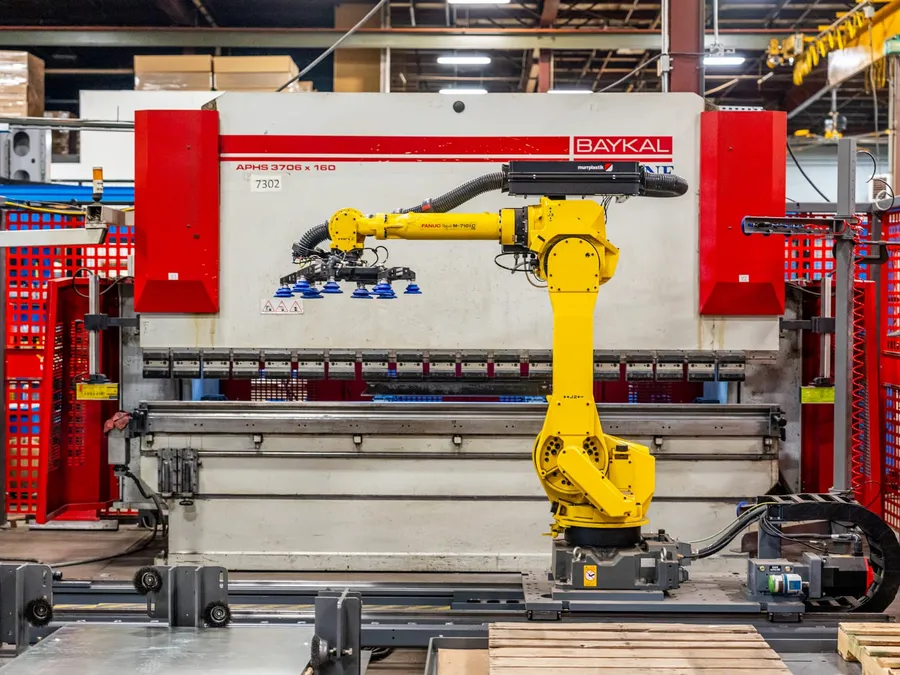
A capable press brake sat idle because its parts were too big for one person. TWA put a FANUC on a rail in front of it, in place.
- 176 tonPress brake kept in service
- 10 ftBed length reached from the rail
- 70 kgRobot payload
- 20 x 20 ftCell footprint
What you told us
The shop is a precision sheet metal job shop. Many of its parts are large, many are bound for electrical enclosures, and all of them run across an aging hydraulic press brake. The brake was mechanically fine. The trouble was everything around it: parts too large and awkward for one operator to handle safely, and skilled operators who were not always there. So an expensive asset sat idle for much of the day, and the whole flow backed up behind it.
Both obvious answers were bad. Replacing the brake meant capital for a problem the machine did not have. Shipping it across the country for a factory-built cell meant weeks without it. The shop wanted its own brake, on its own floor, running more hours with fewer hands on the steel.
What we built
We came to them. The cell was designed and installed on the shop floor, around the brake where it stood, with no relocation and no extended halt in production.
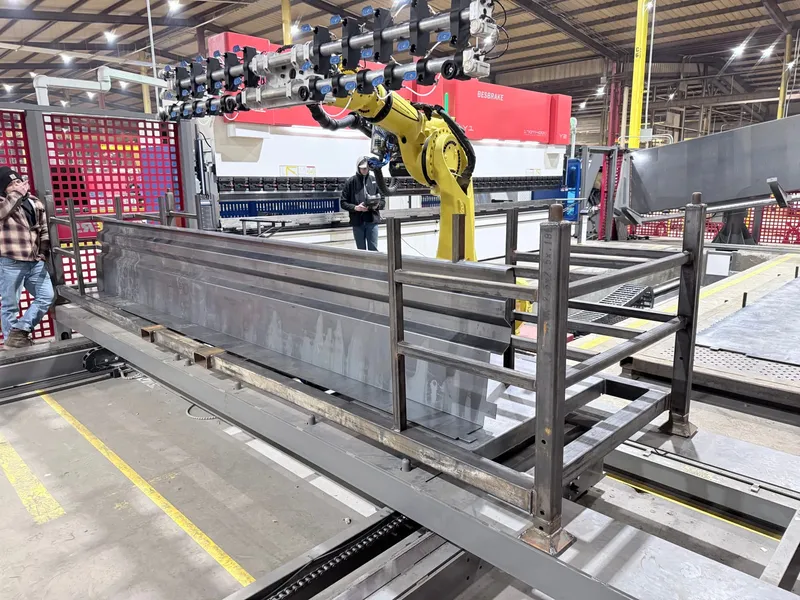
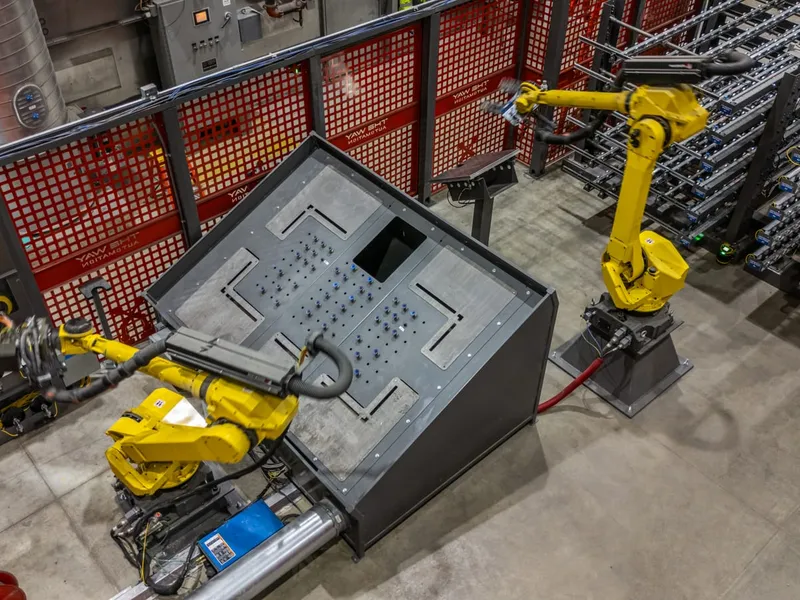
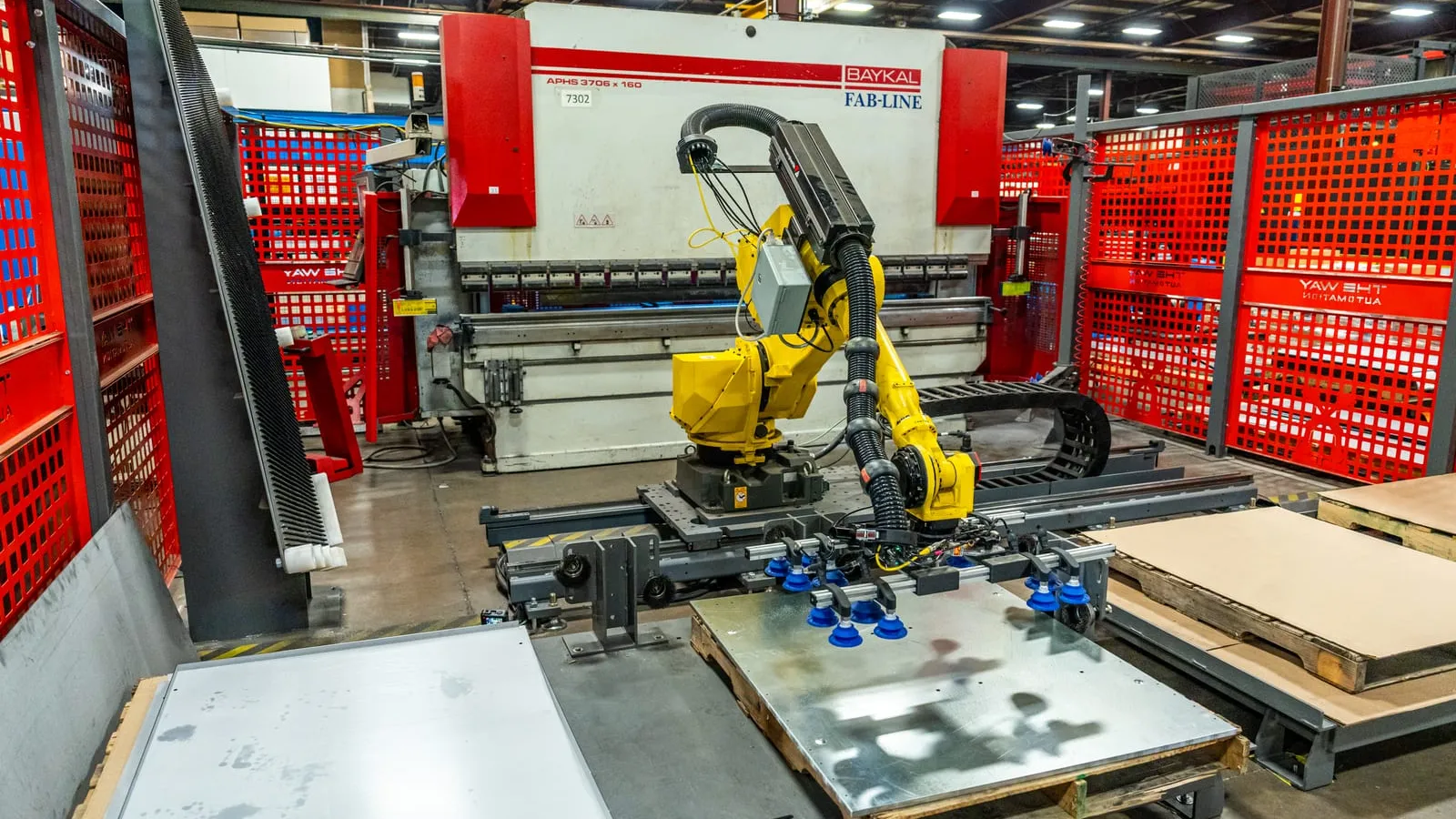
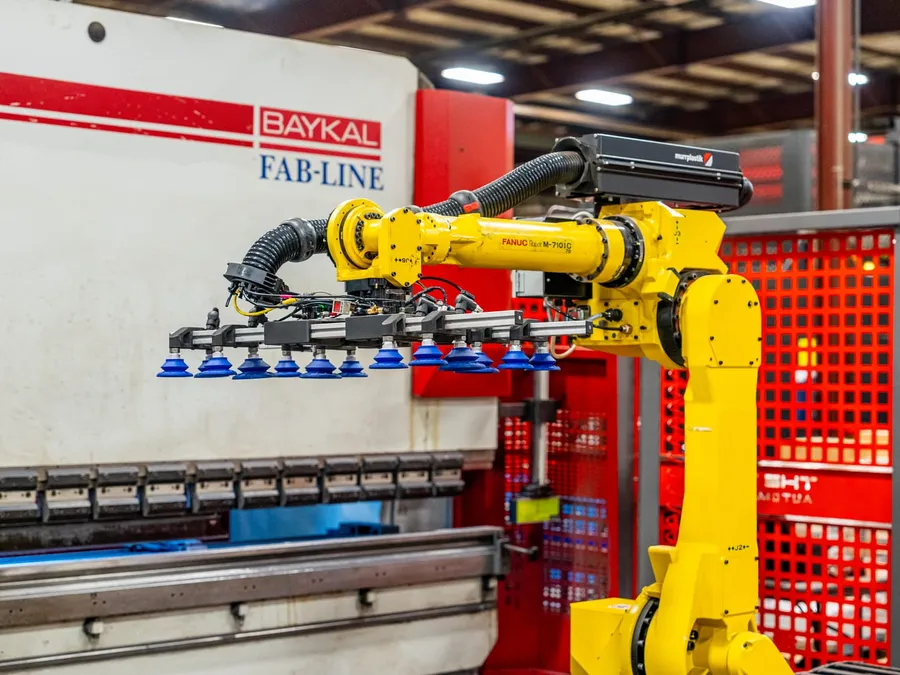
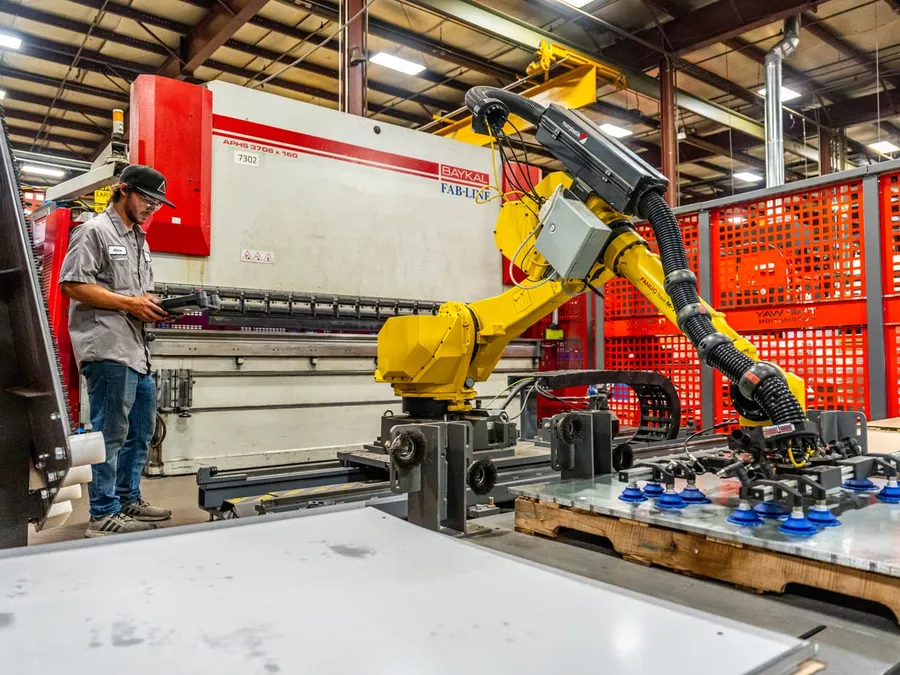
A FANUC M-710iC/70, a 70-kilogram arm, rides a seventh-axis rail that gives it full reach across the brake’s ten-foot bed. The gripper is a custom carbon fiber pneumatic tool, printed and built in our shop, so it is light, inexpensive and quick to change when the part mix changes. The robot picks blanks from the pallet, presents them to the back gauge, follows the bend and stacks the finished part, inside a 20 by 20 foot fenced cell.
We trained the shop’s manager and operators on programming and daily operation before we left, and we support the cell and the team remotely and on site.
Who we worked with
The press brake is a Baykal, and it stayed exactly where the shop put it. FANUC built the robot; we are a FANUC Authorized System Integrator. No dealer is on record for this project. Design, rail, gripper, controls, installation and training were ours.
We automate the machine a customer already owns, whatever its brand, tonnage or bed length. This cell and the Thunder Creek cell are the two retrofits behind that statement.
What came next
The shop’s team runs the cell. That was the design goal: a manager and operators who can program a new part and run the day without calling us, with a support line for the day they want to.
Where the shop takes automation from here is their decision. For a lot of fabricators the first question is not which robot to buy but whether the brake on the floor is worth keeping. This cell is our answer: usually yes.
Your station next
Start with your own station
The Fit Check takes about a minute on your phone. You see the answer first, and you decide what happens next.